

How to Add Social Media Icons to an Email Signature
Enhance your email signature by adding social media icons. Discover step-by-step instructions to turn every email into a powerful marketing tool.

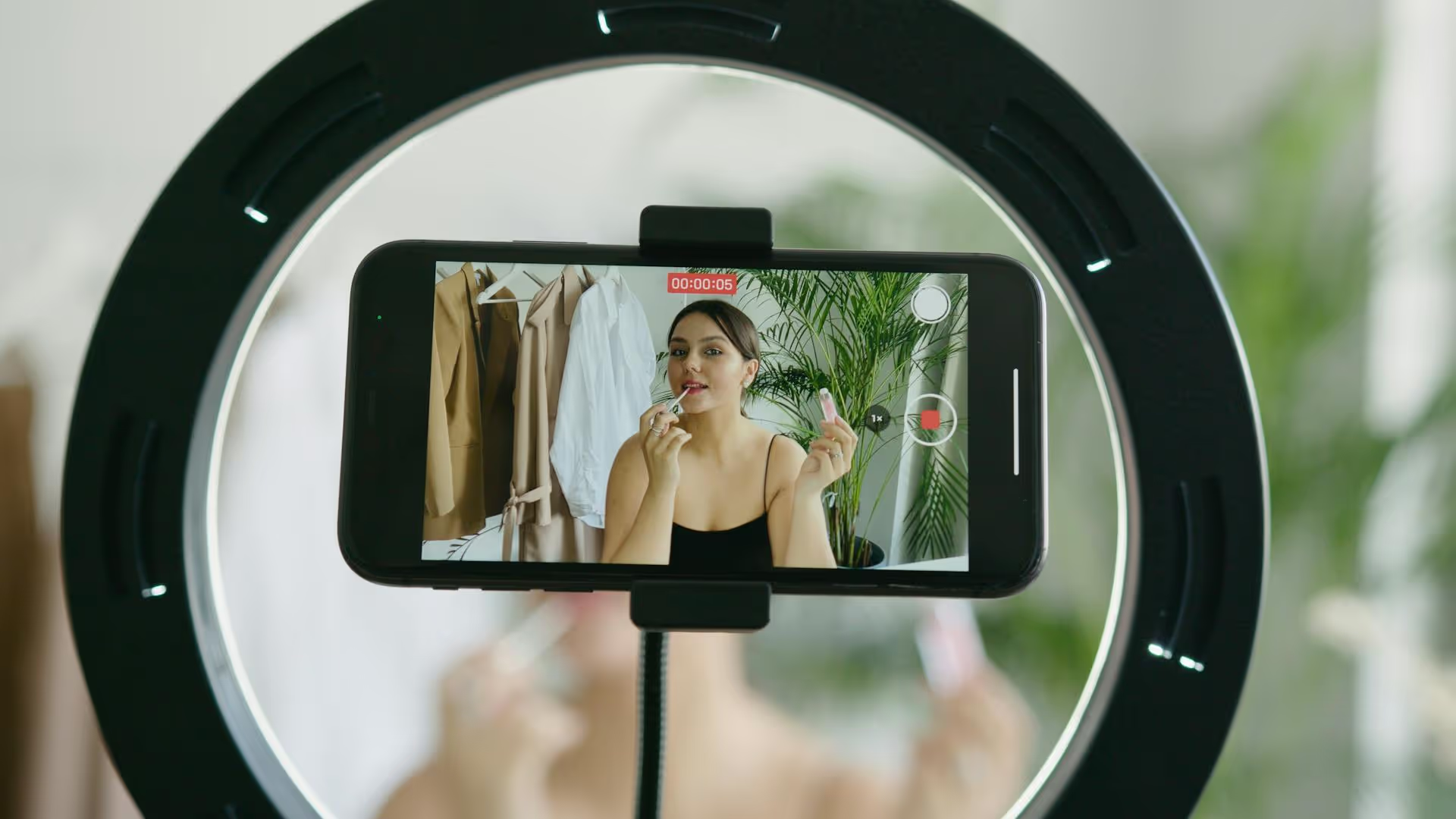
Becoming a user-generated content creator on Instagram allows you to partner with brands you love by creating authentic, relatable content they can use in their marketing. This guide breaks down the exact steps you need to take to go from an aspiring creator to a paid professional, covering everything from building your portfolio to pitching your dream brands.
While people often use the terms interchangeably, a UGC creator and an influencer have distinctly different jobs. Understanding this difference is the first step toward building a successful UGC career.
An influencer is paid to leverage their personal brand and audience. When a brand partners with an influencer, they are paying for that person's stamp of approval and access to their followers. The influencer posts the sponsored content on their own social media accounts.
A UGC creator, on the other hand, is an independent content creator paid to produce authentic, high-quality content for a brand to use on its own channels. The creator gives the brand assets (videos, photos) and usage rights, and the brand runs that content as ads or posts it on its Instagram, TikTok, or website. The UGC creator doesn't have to post the content on their own feed, and the size of their own following is irrelevant.
Brands love UGC because it feels more genuine than a polished, high-production ad. It looks like content made by a real customer, which builds trust and often converts better.
Before you hit record, you need a clear direction. Brands look for creators who have a defined point of view. Trying to create content for every industry under the sun makes your portfolio look scattered and unfocused.
Think about where your passions, knowledge, and interests overlap. Your niche is the subject matter you’ll specialize in. Sticking to a specific category helps you become an expert and attract brands in that space. Some popular niches include:
Choose something you genuinely enjoy. Your enthusiasm will shine through in your content, and you’ll have a much easier time coming up with creative ideas.
Once you’ve got your niche, think about your visual style and on-camera persona. Are you energetic and funny? Calm and educational? Bright and airy? Moody and cinematic? This consistency helps brands immediately understand if your style fits their identity. Look at your current Instagram profile. Does it reflect the niche and style you want to be known for?
This is arguably the most important element for landing your first paid deal. Your portfolio is your resume, showcasing your skills and your unique creative flair. The biggest misconception is that you need to have worked with brands to build one. That’s not true at all.
"Spec" (speculative) work is content you create for brands you love, without being paid, purely to demonstrate your abilities. Pick 3-5 products you already own and use. These can be anything from your favorite moisturizer to your go-to protein powder or a productivity app you use daily.
Your goal is to show versatility. A strong portfolio isn’t just ten videos that all look the same. Create a variety of content for each product you feature to prove you can deliver on different marketing angles. Include:
Keep your videos short and snappy - most brands want content under 30 seconds for social ads. Edit them with captions, use clear lighting, and make sure your audio is crisp.
Create a dedicated place where you can send potential clients to see your amazing work. Free options like Canva, Google Drive folders, or Carrd work perfectly when you're starting out.
Your Instagram shouldn't just be for personal photos anymore. It’s now your digital business card. Whenever you reach out to a brand, the first thing they'll do is check out your profile. Make sure it tells them exactly what they need to know.
Swap out vague quotes for a clear, concise bio that screams "hire me." Include these key elements:
Example Bio:
Sarah Jenkins | UGC Creator
Helping beauty & skincare brands make content that ✨ converts ✨
📍Austin, TX
Let's create something together! 👇
📧 hello@sarahjcreates dot com
Instagram Highlights are prime real estate for your portfolio. Create a dedicated Highlight reel called "UGC," "Portfolio," or "Work with Me." Post your spec content here so it's instantly accessible to any brand manager who lands on your profile.
Your portfolio is ready and your profile is optimized. Now it’s time to actively seek opportunities. While some brands may find you organically, the most successful beginners are proactive.
Start with brands you already use and admire. Your genuine admiration will make your pitch much more convincing. Small to medium-sized businesses are often more accessible and have a greater need for creator-led content than massive corporations. Look for brands that are already running Ads with UGC-style videos in their Instagram feeds - it’s a clear sign they value that content type.
Sending a DM is easy, but it can get lost. The most professional approach is to find a marketing email. Look in the "Contact" section of their website, or use LinkedIn to find people with titles like "Social Media Manager," "Brand Manager," or "Influencer Marketing Coordinator." If all else fails, a general `info@` or `hello@` email address is better than nothing.
Keep it short, direct, and focused on providing value. Brand managers are busy, so get right to the point:
Congratulations, a brand has responded and wants to work with you! Now comes the business side of things: negotiating your rates and understanding usage rights.
As a beginner, pricing can be tricky. Don't sell yourself short. You are providing a valuable service that saves brands time and money on content production. Rates vary widely based on experience, location, and the scope of work, but a good starting point for a brand new creator is:
Usage rights are one of the most important concepts to understand. "Usage rights" refers to how and where the brand can use your content and for how long. It's standard for brands to ask for usage rights for a period of time, such as 3, 6, or 12 months. If a brand wants "perpetual" or "in perpetuity" rights, meaning they can use the content forever, you should charge a significantly higher fee.
Always get the agreement in writing. A simple contract should outline the deliverables (e.g., three 15-second videos), the timeline, the total payment, and the agreed-upon usage rights.
Becoming an in-demand UGC creator on Instagram is a mix of creative skill and strategic business sense. By defining your niche, building a strong portfolio filled with valuable spec content, and mastering the art of the pitch, you can successfully turn your passion for content creation into a flexible and fulfilling career.
As you start landing clients and your content calendar grows, managing all your projects can get complicated fast. We built Postbase to simplify that chaos. It's designed specifically for today’s content formats, helping you plan and schedule everything from your personal brand posts to your client deliverables across all your platforms, all from one calm, visual calendar. It helps keep you organized so you can focus on creating more amazing UGC.
Spencer's spent a decade building products at companies like Buffer, UserTesting, and Bump Health. He's spent years in the weeds of social media management—scheduling posts, analyzing performance, coordinating teams. At Postbase, he's building tools to automate the busywork so you can focus on creating great content.

Enhance your email signature by adding social media icons. Discover step-by-step instructions to turn every email into a powerful marketing tool.
Record clear audio for Instagram Reels with this guide. Learn actionable steps to create professional-sounding audio, using just your phone or upgraded gear.
Check your Instagram profile interactions to see what your audience loves. Discover where to find these insights and use them to make smarter content decisions.
Requesting an Instagram username? Learn strategies from trademark claims to negotiation for securing your ideal handle. Get the steps to boost your brand today!
Attract your ideal audience on Instagram with our guide. Discover steps to define, find, and engage followers who buy and believe in your brand.
Activate Instagram Insights to boost your content strategy. Learn how to turn it on, what to analyze, and use data to grow your account effectively.
Wrestling with social media? It doesn’t have to be this hard. Plan your content, schedule posts, respond to comments, and analyze performance — all in one simple, easy-to-use tool.



